Beale Street
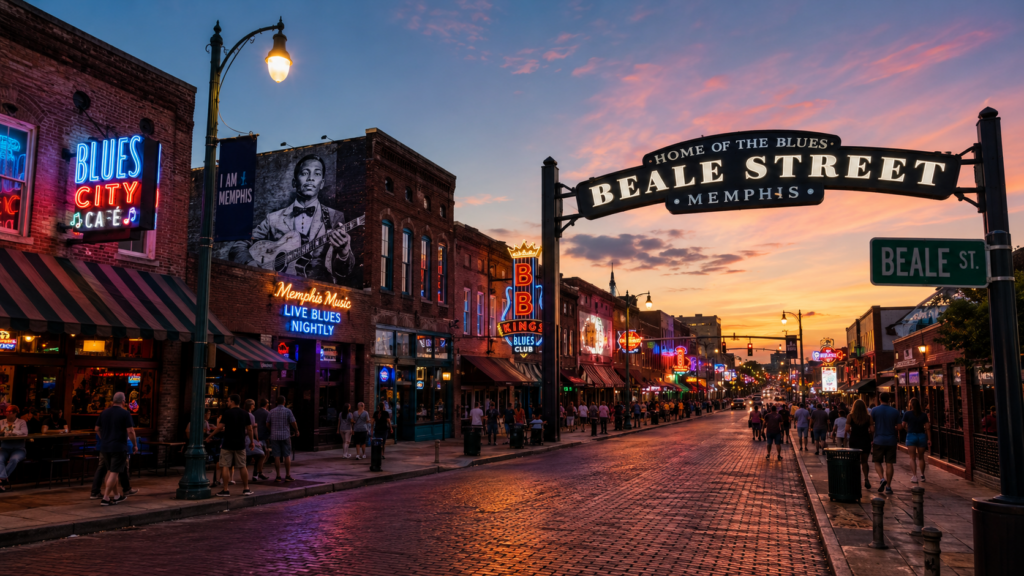
Beale Street: The Heartbeat of Memphis Music
No visit to Memphis is complete without experiencing Beale Street, one of the most famous music streets in America. Known around the world as the “Home of the Blues,” Beale Street is where Memphis history, live music, neon lights, Southern food, and unforgettable stories all come together. On our tour, you’ll get a closer look at the street that helped shape the sound of American music and became a must-see destination for visitors from around the world.
Beale Street dates back to 1841 and grew into one of the most important cultural and commercial centers for Memphis, especially for Black business, entertainment, and music. In the early 1900s, musicians, performers, entrepreneurs, and travelers filled the street with energy. It became a place where blues music moved from porches, fields, churches, and juke joints into the heart of the city. W.C. Handy, often called the “Father of the Blues,” helped popularize the blues from Memphis, and his famous works helped carry the Beale Street sound far beyond Tennessee.
Over the years, Beale Street became a launching ground and gathering place for legendary artists including B.B. King, Albert King, Memphis Minnie, Howlin’ Wolf, and many more. Fun fact: B.B. King’s famous nickname traces back to his early days as the “Beale Street Blues Boy,” which was later shortened to “Blues Boy” and finally to “B.B.” That connection alone makes Beale Street a powerful stop for anyone who loves music history.
Today, Beale Street is still alive with blues clubs, restaurants, historic storefronts, street performers, neon signs, and the unmistakable sound of Memphis. Whether you are a music fan, history lover, foodie, or first-time visitor, Beale Street gives you a real taste of the city’s personality. It is not just a street — it is a living piece of Memphis history, and seeing it with a local guide helps you understand why this legendary district continues to attract visitors from all over the world.